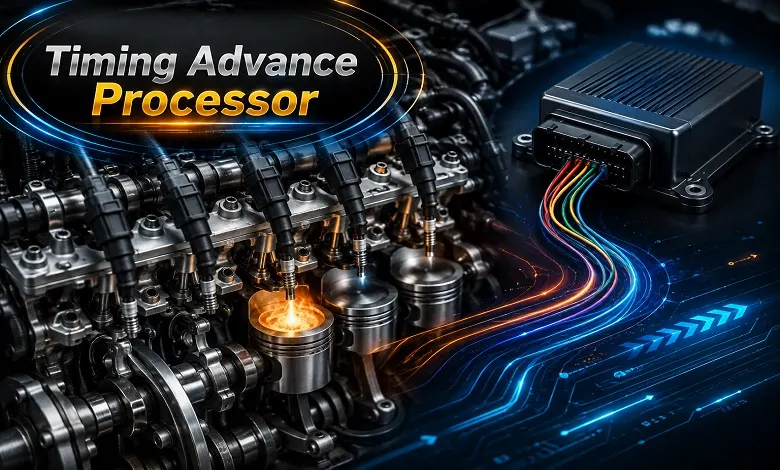
Modern engines rely on precise ignition timing to deliver smooth performance, efficient fuel use, and dependable operation. Even a small change in when the spark occurs can affect how effectively the air-fuel mixture burns inside the combustion chamber. This is where a Timing Advance Processor can play an important role.
A Timing Advance Processor is designed to adjust ignition timing according to engine operating conditions. By helping the ignition system deliver the spark at a more suitable point in the combustion cycle, it can support better throttle response, smoother running, and improved overall engine behaviour.
In this guide, we will explore what a Timing Advance Processor does, how it works, its main benefits, where it can be useful, and what drivers should consider before installing one.
What Is a Timing Advance Processor?
A Timing Advance Processor is an electronic device that modifies ignition timing signals sent to an engine’s ignition system. In simple terms, it helps determine whether the spark should occur slightly earlier than the original timing setting.
Ignition timing is important because the fuel-air mixture does not produce its maximum pressure instantly after the spark plug fires. The combustion process takes a short amount of time. Therefore, the spark may need to occur before the piston reaches its ideal position so that combustion pressure develops at the right moment.
The amount of timing advance needed can vary depending on factors such as:
- Engine speed
- Engine load
- Fuel quality
- Engine temperature
- Throttle position
- Engine design
- Operating conditions
A properly calibrated Timing Advance Processor can account for some of these conditions and adjust ignition timing accordingly.
How Does a Timing Advance Processor Work?
To understand the benefits, it helps to understand the basic process.
When an engine operates, sensors and electronic control systems monitor various conditions. Depending on the vehicle or engine system, the ignition controller receives information about engine speed, position, load, and other parameters.
The Timing Advance Processor modifies the relevant timing signal before it reaches the ignition control system. This can cause the spark to occur earlier than it would under the original setting.
For example, imagine an engine operating at higher RPM. The available time for combustion becomes shorter as engine speed increases. In certain applications, additional ignition advance can help the combustion process occur at a more appropriate point in the cycle.
However, more advance is not always better. Excessive advance can cause knocking, detonation, overheating, or poor engine performance. For that reason, proper calibration is one of the most important aspects of using a Timing Advance Processor.
Key Benefits of a Timing Advance Processor
A properly selected and correctly adjusted Timing Advance Processor can offer several potential advantages.
1. Improved Throttle Response
One of the most noticeable benefits can be improved throttle response. When ignition timing is appropriately optimized, combustion can occur more effectively after the throttle is opened.
This may make the engine feel more responsive, particularly during acceleration. The improvement can be more noticeable in engines where the original ignition timing is conservative or where operating conditions differ significantly from the factory setup.
A responsive engine can make every day driving feel smoother without necessarily requiring major mechanical modifications.
2. Better Engine Performance
Ignition timing directly affects combustion efficiency and engine output. If the spark occurs at an appropriate point, the expanding combustion gases can push the piston more effectively.
A Timing Advance Processor may therefore help an engine make better use of the combustion process. Depending on the engine and its existing calibration, this can contribute to stronger acceleration and improved drivability.
It is important to remember that an ignition timing device is not a magic performance upgrade. The results depend heavily on the engine, fuel, existing ignition system, and calibration.
3. Potential Fuel-Economy Improvements
Fuel economy is another reason some engine owners consider ignition timing adjustments.
When combustion occurs efficiently, the engine may be able to produce the required power with less wasted energy. Under suitable operating conditions, optimized ignition timing can contribute to better fuel efficiency.
However, fuel economy improvements are not guaranteed. Driving style, vehicle weight, tire pressure, engine condition, fuel quality, and traffic conditions can have a much larger effect on real-world consumption.
A Timing Advance Processor should therefore be viewed as one part of an overall engine optimization strategy rather than a guaranteed fuel-saving solution.
4. Smoother Engine Operation
Correct ignition timing can contribute to smoother engine operation. If timing is poorly matched to operating conditions, an engine may experience hesitation, rough acceleration, or inconsistent response.
A well-calibrated system can help the engine transition between different operating conditions more smoothly.
This can be especially useful when an engine has been modified or is being operated in conditions that differ from its original design assumptions.
5. Better Low-Speed Drivability
Some engines benefit from carefully optimized ignition timing at low and moderate speeds. A suitable timing strategy can improve the way the engine responds when pulling away from a stop or accelerating under normal driving conditions.
This does not necessarily mean the engine will produce dramatically more power. Instead, the benefit may appear as improved responsiveness and easier everyday operation.
6. Support for Engine Modifications
Engine modifications can change the conditions under which an engine operates. Changes to intake systems, exhaust components, compression, fuel delivery, or other parts can affect the ideal ignition timing.
A Timing Advance Processor can sometimes help compensate for these changes by allowing the ignition timing to be adjusted more appropriately.
This is particularly relevant to enthusiasts who modify older engines or specialized applications where the original ignition system offers limited adjustment.
Timing Advance and Combustion Efficiency
The relationship between ignition timing and combustion is central to understanding why a Timing Advance Processor can be useful.
When the spark plug ignites the air-fuel mixture, combustion begins and pressure builds inside the cylinder. Maximum cylinder pressure needs to occur at an appropriate point after the piston reaches top dead centre.
If the spark occurs too late, combustion pressure may develop after the ideal point. This can reduce efficiency and power.
If the spark occurs too early, combustion pressure may oppose the piston while it is still moving upward. Excessive advance can contribute to knocking or detonation and may increase mechanical and thermal stress.
The goal is therefore not simply to advance timing as much as possible. The goal is to find an appropriate timing strategy for the engine and its operating conditions.
When Can a Timing Advance Processor Be Useful?
A Timing Advance Processor may be useful in several situations.
Older Ignition Systems
Older engines may use ignition systems with limited electronic adjustment. An aftermarket processor can provide additional control over timing without requiring a complete engine management replacement.
Modified Engines
Performance modifications can change an engine’s combustion characteristics. A processor may provide additional flexibility when the original ignition calibration is no longer ideal.
Alternative Operating Conditions
Engines operating at different altitudes, temperatures, or loads may respond differently to ignition timing. Adjustable timing control can sometimes help accommodate these changes.
Performance-Oriented Applications
Motorsport, off-road, and enthusiast applications may require ignition calibration tailored to specific operating conditions. In these situations, timing adjustment can become an important part of engine tuning.
Factors to Consider Before Installing One
Although the benefits can be attractive, a Timing Advance Processor should not be installed without considering the complete engine setup.
Engine Compatibility
First, determine whether the processor is designed for your particular ignition system and engine. Different engines use different timing signals, sensors, and control strategies.
Using an incompatible device can cause poor operation or potentially damage components.
Fuel Quality
Ignition timing and fuel octane are closely related. Higher timing advance can increase the engine’s sensitivity to knock when fuel quality is insufficient.
Always consider the fuel recommended for the engine before making timing changes.
Existing Engine Condition
A timing adjustment cannot fix worn mechanical components, faulty sensors, poor fuel delivery, weak ignition components, or other underlying problems.
Before tuning ignition timing, make sure the engine is mechanically healthy.
Calibration
Calibration is arguably the most important consideration. A setting that works well on one engine may be unsuitable for another.
Ideally, timing changes should be evaluated using appropriate diagnostic equipment. Professional tuning can help identify whether an adjustment is actually improving performance.
Signs That Ignition Timing May Be Incorrect
Incorrect ignition timing can produce several symptoms. These can vary depending on the engine and the severity of the problem.
Possible signs include:
- Engine knocking or pinging
- Poor acceleration
- Hesitation
- Difficult starting
- Rough idle
- Excessive engine heat
- Reduced fuel economy
- Unusual exhaust behaviour
- Loss of power
These symptoms can also be caused by many other mechanical or electrical problems. Therefore, they should not automatically be blamed on ignition timing.
If an engine develops unusual symptoms after installing or adjusting a Timing Advance Processor, the timing settings should be checked promptly.
Timing Advance Processor vs. Other Engine Tuning Methods
A Timing Advance Processor is only one way to influence engine performance.
Modern vehicles often use sophisticated engine control units that manage ignition timing, fuel injection, throttle control, emissions systems, and other functions.
An ECU reflash or custom engine tune can provide much broader control than a standalone timing device. However, such solutions may also be more complex or expensive.
For older or simpler engines, a Timing Advance Processor can provide a practical way to modify ignition timing without replacing the entire control system.
The best solution depends on the engine architecture, goals, budget, and level of modification.
Common Mistakes to Avoid
Using too much ignition advance is one of the biggest mistakes.
More advance does not automatically produce more horsepower. Beyond the engine’s optimal point, additional advance can actually reduce performance and increase the risk of knock.
Other mistakes include:
- Installing a device without checking compatibility
- Ignoring the manufacturer’s instructions
- Using unsuitable fuel
- Making large timing changes without testing
- Ignoring engine temperature
- Assuming every engine responds the same way
- Continuing to drive after persistent knocking occurs
Small, controlled changes are generally preferable to aggressive adjustments.
How to Get the Best Results
If you are considering a Timing Advance Processor, start by identifying your actual goal. Are you looking for improved throttle response, better drivability, support for engine modifications, or more precise ignition control?
Next, check the engine’s current ignition setup and overall mechanical condition. A professional inspection can help identify problems that should be addressed before tuning.
Once the system is installed, changes should be made carefully. Monitor engine behaviour and, where appropriate, use diagnostic or tuning equipment to evaluate the results.
A successful setup should improve the way the engine operates without introducing knocking, overheating, hard starting, or other unwanted symptoms.
Frequently Asked Questions
A. It can potentially improve engine performance when the original ignition timing is not optimal for the engine’s current configuration. However, the actual power gain varies significantly between engines and applications.
A. Optimized ignition timing can contribute to combustion efficiency and may improve fuel economy under certain conditions. However, there is no guarantee, and driving habits and engine condition often have a greater impact.
A. No. Excessive advance can cause knocking, detonation, overheating, and reduced performance. Ignition timing needs to match the engine, fuel, load, and operating conditions.
A. No. Compatibility depends on the engine and ignition system. Always verify that the device is designed for the specific application before installation.
A. For significant changes or modified engines, professional tuning can be a good idea. Proper measurement and calibration can help achieve performance improvements while reducing the risk of engine damage.
Conclusion
A Timing Advance Processor can be a useful tool for improving ignition control in the right engine application. By adjusting when the spark occurs, it may help support better throttle response, smoother operation, combustion efficiency, and overall drivability.
The key is proper calibration. Ignition timing must be matched to the engine’s design, fuel quality, operating conditions, and modifications. Excessive timing advance can create serious problems, so simply adding more advance is not an effective tuning strategy.
For older ignition systems, modified engines, and specialized applications, a Timing Advance Processor can provide valuable timing flexibility without requiring a complete engine management upgrade. When selected carefully and installed correctly, it can become a practical part of a broader engine tuning strategy.
