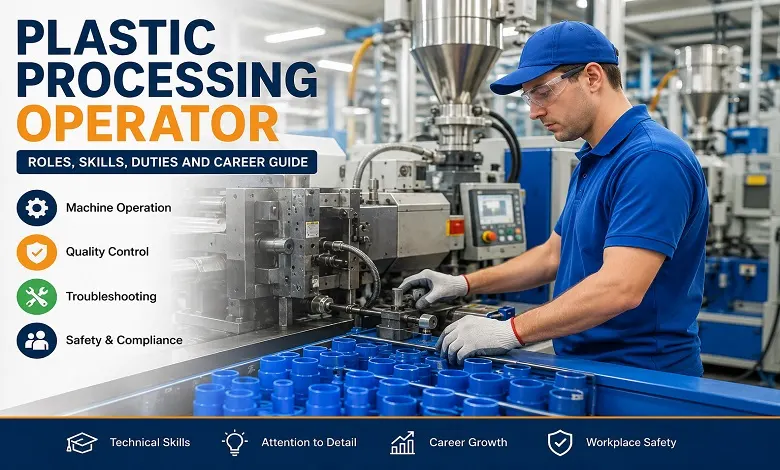
A Plastic Processing Operator plays an important role in modern manufacturing. Plastic products are used in almost every industry, including automotive, packaging, construction, electronics, healthcare, household goods, and consumer products. Behind many of these products are skilled operators who run machines, monitor production, check quality, and make sure manufacturing processes operate safely and efficiently.
For people interested in a hands-on manufacturing career, becoming a Plastic Processing Operator can be a practical career option. The job combines technical knowledge, machine operation, quality control, problem-solving, and workplace safety.
This guide explains what a Plastic Processing Operator does, the skills required, common responsibilities, equipment used, career opportunities, and how to build a successful career in plastic processing.
What Is a Plastic Processing Operator?
A Plastic Processing Operator is a manufacturing professional responsible for operating and monitoring equipment used to transform plastic materials into finished or semi-finished products.
Depending on the manufacturing facility, an operator may work with injection molding machines, extrusion equipment, blow molding systems, thermoforming machines, or other specialized plastic-processing equipment.
The operator typically follows production instructions and machine settings provided by engineers, supervisors, or production managers. They load materials, monitor machines, inspect products, identify problems, and make appropriate adjustments within their responsibilities.
Because plastic manufacturing often involves automated and high-speed equipment, operators need to understand both the production process and basic machine controls.
What Does a Plastic Processing Operator Do?
The exact duties can vary depending on the company, machine type, and product being manufactured. However, most Plastic Processing Operators perform several core tasks.
1. Operating Plastic Processing Machines
The primary responsibility is operating production machinery. Operators start, stop, and monitor machines according to established procedures.
They may control temperature, pressure, speed, cycle times, material feeds, and other machine parameters. Following the correct settings helps maintain consistent production and product quality.
2. Preparing Raw Materials
Plastic processing begins with the correct preparation of raw materials. Operators may load plastic pellets, powders, additives, colorants, or other materials into processing equipment.
They need to verify that the correct material is being used for each production order. Incorrect materials can cause defects, waste, or production delays.
3. Monitoring Production
A Plastic Processing Operator continuously monitors equipment during production. This can involve checking machine displays, production cycles, temperatures, pressure levels, material flow, and other operating conditions.
Early identification of unusual machine behavior can prevent larger equipment problems and reduce production downtime.
4. Inspecting Finished Products
Quality control is another important part of the role. Operators inspect finished plastic products for issues such as:
- Cracks or breaks
- Warping
- Discoloration
- Surface defects
- Incorrect dimensions
- Incomplete molding
- Flash or excess material
- Contamination
Depending on the workplace, operators may use measuring instruments or inspection equipment to verify that products meet required specifications.
5. Adjusting Machine Settings
When production conditions change, operators may need to make approved adjustments to machine settings.
For example, changes in material behavior, temperature, humidity, or machine performance can affect the final product. Operators use their knowledge and production instructions to maintain consistent output.
6. Troubleshooting Production Problems
Machines do not always operate perfectly. A Plastic Processing Operator should be able to recognize common production problems and take appropriate corrective action.
Minor issues may be resolved through routine adjustments, cleaning, material checks, or machine resets. More serious mechanical or electrical problems may need to be reported to maintenance technicians or engineers.
7. Maintaining a Clean Work Area
Cleanliness is important in plastic manufacturing. Operators may clean machines, remove excess plastic, organize materials, and keep the production area free of unnecessary debris.
Good housekeeping can improve safety, reduce contamination, and support efficient production.
8. Recording Production Information
Operators may be responsible for recording production data such as quantities produced, rejected products, machine settings, downtime, material usage, and quality results.
Accurate records help supervisors identify production trends and improve manufacturing efficiency.
Essential Skills for a Plastic Processing Operator
Successful operators need a combination of technical, practical, and interpersonal skills.
Technical Skills
A basic understanding of plastic-processing machinery is essential. Operators should learn how different machines work and how production variables can affect finished products.
Useful technical skills include:
- Machine operation
- Basic mechanical knowledge
- Understanding of plastic materials
- Quality inspection
- Equipment monitoring
- Basic troubleshooting
- Measurement techniques
- Production documentation
- Computer and control-panel operation
Attention to Detail
Small changes in temperature, pressure, material quality, or machine settings can affect the final product. Strong attention to detail helps operators identify defects and production issues before they become major problems.
Problem-Solving Skills
Manufacturing environments can involve unexpected challenges. A good operator should be able to identify the source of a basic problem, follow troubleshooting procedures, and know when to request technical assistance.
Communication Skills
Operators frequently work with supervisors, quality-control personnel, maintenance technicians, engineers, and other production employees.
Clear communication is important when reporting machine problems, quality issues, safety concerns, or production delays.
Physical Stamina
Many manufacturing jobs involve standing for extended periods, moving around production areas, and sometimes handling materials or components. Physical stamina can therefore be useful for the role.
Safety Awareness
Plastic processing can involve high temperatures, moving machinery, pressure, and industrial equipment. Operators must understand workplace safety procedures and use appropriate personal protective equipment.
Common Equipment Used in Plastic Processing
A Plastic Processing Operator may work with different types of equipment depending on the manufacturing process.
Injection Molding Machines
Injection molding is widely used to manufacture plastic components. Plastic material is heated until it becomes molten and then injected into a mold under controlled conditions.
Operators monitor the molding cycle and inspect parts for defects.
Extrusion Machines
Extrusion equipment produces continuous plastic products such as pipes, films, sheets, profiles, and tubing.
Operators monitor material flow, temperatures, cooling systems, and product dimensions.
Blow Molding Equipment
Blow molding is commonly used to manufacture hollow plastic products such as bottles and containers.
Operators monitor the molding process and ensure that products meet required specifications.
Thermoforming Machines
Thermoforming uses heat to soften plastic sheets before forming them over or into molds. The process is used for packaging, trays, containers, and various industrial products.
Auxiliary Equipment
Plastic processing facilities may also use dryers, material loaders, grinders, chillers, temperature controllers, conveyors, and other supporting equipment.
Understanding how these systems work together can make an operator more effective.
Plastic Processing Operator Work Environment
Plastic Processing Operators generally work in manufacturing plants, production facilities, factories, or specialized plastic-processing operations.
The environment can be fast-paced, particularly when production targets are high. Depending on the facility, operators may work in shifts, including evenings, nights, weekends, or rotating schedules.
Noise levels, heat, machinery, and industrial materials can also be part of the working environment. Employers typically provide safety training and require workers to follow established procedures.
Education and Training Requirements
The educational requirements for a Plastic Processing Operator can vary by employer. Many entry-level positions may require a high school diploma or equivalent qualification, while technical training can provide an advantage.
Useful areas of training include:
- Manufacturing technology
- Plastics technology
- Industrial machinery
- Mechanical systems
- Quality control
- Workplace safety
- Production operations
Many operators also develop their skills through on-the-job training. Experienced employees or supervisors may teach new workers how to operate specific machines, follow production procedures, perform inspections, and respond to common issues.
Technical certifications or vocational programs may also improve employment opportunities.
How to Become a Plastic Processing Operator
Starting a career in plastic processing does not necessarily require years of formal education. A practical approach can involve several steps.
Step 1: Complete Basic Education
Start with a high school diploma or equivalent qualification if required by your target employer.
Step 2: Learn Manufacturing Fundamentals
Develop a basic understanding of manufacturing, machine operation, measurements, materials, and workplace safety.
Step 3: Gain Technical Training
Consider vocational or technical training related to plastics, manufacturing, mechanical systems, or industrial operations.
Step 4: Build Machine-Operation Experience
Entry-level manufacturing positions can provide valuable hands-on experience. Learn how to operate equipment according to company procedures and production specifications.
Step 5: Develop Quality-Control Skills
Learn how to identify common defects and use basic measuring tools. Quality awareness is an important part of plastic processing.
Step 6: Follow Safety Procedures
Become familiar with machine guarding, personal protective equipment, emergency procedures, lockout/tagout requirements where applicable, and other workplace safety practices.
Step 7: Continue Learning
Plastic-processing technology continues to evolve. Learning about automation, computer-controlled machinery, process monitoring, and advanced manufacturing systems can help you progress professionally.
Importance of Quality Control in Plastic Processing
Quality control is one of the most important aspects of plastic manufacturing. A small production problem can result in thousands of defective products if it is not identified quickly.
A Plastic Processing Operator contributes to quality by monitoring production conditions, inspecting products, identifying defects, and reporting problems.
Consistent quality can reduce material waste, lower production costs, improve customer satisfaction, and protect the manufacturer’s reputation.
Operators therefore need to understand the quality standards associated with the products they manufacture.
Workplace Safety for Plastic Processing Operators
Safety should always be a priority in a plastic-processing facility.
Operators may work around heated materials, rotating components, moving machinery, electrical systems, and pressurized equipment. Following established safety procedures helps reduce the risk of workplace injuries.
Important safety practices may include:
- Wearing required protective equipment
- Following machine operating procedures
- Keeping guards and safety devices in place
- Maintaining a clean work area
- Reporting unsafe conditions
- Following emergency procedures
- Never bypassing safety systems
- Receiving proper training before operating equipment
Operators should always follow the specific safety rules and procedures established by their employer.
Career Growth Opportunities
A Plastic Processing Operator can develop a long-term career in manufacturing. With experience and additional training, workers may move into more advanced technical or supervisory positions.
Potential career paths include:
Plastic Processing Operator → Senior Operator → Lead Operator → Production Supervisor
Other opportunities may include roles in:
- Quality control
- Process technician positions
- Machine setup
- Maintenance support
- Production management
- Manufacturing supervision
- Plastics technology
Developing technical expertise, leadership abilities, and process knowledge can create opportunities for career advancement.
Advantages of a Plastic Processing Career
Working as a Plastic Processing Operator can offer several benefits.
First, it provides hands-on experience with industrial machinery and modern manufacturing systems. This experience can be valuable for people who enjoy practical and technical work.
Second, plastic products are used across many industries, creating demand for manufacturing skills in different sectors.
Third, operators can develop transferable skills such as quality control, machine operation, troubleshooting, safety awareness, and production management.
Finally, experienced operators may have opportunities to move into higher-level technical or supervisory roles.
Challenges of the Job
Like any manufacturing career, the role also has challenges.
Operators may work long or rotating shifts and spend much of the working day on their feet. Production environments can also be noisy, warm, or physically demanding.
Meeting production targets while maintaining product quality can require concentration and discipline.
The best way to handle these challenges is to develop strong technical knowledge, follow safety procedures, communicate effectively, and maintain consistent work habits.
Future of Plastic Processing Operator Careers
The plastic manufacturing industry is increasingly adopting automation, robotics, sensors, computerized controls, and data-driven production systems.
This does not necessarily eliminate the need for skilled operators. Instead, the role is evolving. Modern operators may need to understand digital control systems, automated production lines, process-monitoring software, and advanced quality-control equipment.
Workers who combine traditional machine-operation skills with modern technology knowledge can be better prepared for changing manufacturing environments.
Frequently Asked Questions
A. A Plastic Processing Operator operates and monitors machinery used to manufacture plastic products. The role commonly includes machine operation, material preparation, quality inspection, troubleshooting, and production documentation.
A. Important skills include machine operation, attention to detail, basic mechanical knowledge, quality control, troubleshooting, communication, safety awareness, and physical stamina.
A. Depending on the facility, operators may use injection molding machines, extrusion machines, blow molding equipment, thermoforming machines, material dryers, loaders, conveyors, and other production equipment.
A. Requirements vary by employer. Some entry-level positions provide on-the-job training, while technical or vocational education can provide useful knowledge and improve career opportunities.
A. It can be a good career choice for people who enjoy hands-on technical work and manufacturing. With experience and additional training, operators can progress into senior, technical, quality-control, or supervisory positions.
Final Thoughts
A Plastic Processing Operator is an important part of the modern manufacturing industry. From preparing raw materials and operating machinery to inspecting finished products and responding to production problems, operators help ensure that plastic products are manufactured safely, efficiently, and consistently.
The role requires technical understanding, attention to detail, problem-solving ability, and a strong commitment to workplace safety. With appropriate training and practical experience, it can provide a solid foundation for a long-term career in manufacturing and plastics technology.
As factories continue to adopt automation and advanced production systems, operators who keep developing their technical and digital skills can position themselves for new opportunities. For anyone interested in practical manufacturing work, plastic processing can be a valuable field to explore.
