Introduction
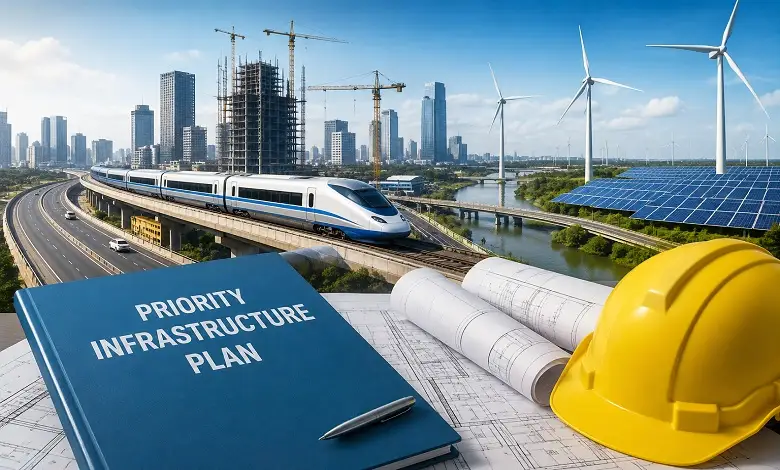
Infrastructure is the backbone of every modern economy. Roads, bridges, railways, airports, power grids, water systems, schools, hospitals, and digital communication networks all play a vital role in supporting economic growth and improving the quality of life. However, governments often face limited budgets and competing demands, making it impossible to fund every proposed project at once. This is where a Priority Infrastructure Plan becomes essential.
A priority infrastructure plan helps governments identify, evaluate, and rank major infrastructure projects based on their economic, social, and environmental value. Rather than making investment decisions on short-term political interests, a structured planning process focuses on projects that deliver the greatest long-term benefits for communities, businesses, and future generations.
This guide explains what a priority infrastructure plan is, why it matters, how governments prioritize major projects, the key evaluation criteria, common challenges, and future trends in infrastructure planning.
What Is a Priority Infrastructure Plan?
A Priority Infrastructure Plan is a strategic framework used by governments to determine which infrastructure projects should receive funding and move forward first. It establishes a transparent process for evaluating proposed projects based on national, regional, and local priorities.
These plans often include short-term, medium-term, and long-term investment strategies covering transportation, utilities, healthcare, education, energy, telecommunications, environmental protection, and public services.
Instead of reacting only to immediate needs, governments use infrastructure planning to prepare for future population growth, economic development, climate resilience, and technological advancements.
Why Infrastructure Prioritization Matters
Public infrastructure projects require significant financial investment and often take years to complete. Because government resources are limited, prioritization ensures that available funding is directed toward projects with the greatest overall impact.
Effective prioritization helps governments:
- Improve public services.
- Support economic development.
- Reduce transportation congestion.
- Strengthen public safety.
- Create employment opportunities.
- Encourage private investment.
- Enhance environmental sustainability.
- Improve regional connectivity.
- Increase resilience against natural disasters.
A structured priority infrastructure plan also improves public confidence by making investment decisions more transparent and evidence-based.
How Governments Prioritize Major Infrastructure Projects
Developing a priority infrastructure plan involves several stages of analysis, consultation, and decision-making. While the process differs by country and region, many governments follow a similar approach.
1. Identifying Infrastructure Needs
The first step is understanding where infrastructure improvements are required. Governments collect information from multiple sources, including population forecasts, traffic studies, economic reports, public consultations, and local authorities.
Common infrastructure needs include:
- Highway expansion
- Bridge replacement
- Public transportation improvements
- Water supply upgrades
- Renewable energy projects
- Broadband internet expansion
- Flood protection systems
- Healthcare facilities
- Educational institutions
Accurate data helps planners identify both current deficiencies and future infrastructure demands.
2. Evaluating Economic Benefits
Economic impact is one of the most important factors when selecting infrastructure projects.
Governments analyze whether a project will:
- Increase productivity
- Create jobs
- Attract new businesses
- Improve trade
- Support tourism
- Reduce transportation costs
- Increase property values
Projects with strong long-term economic returns often receive higher priority because they contribute to national and regional development.
3. Assessing Community Benefits
Infrastructure should improve people’s daily lives, not simply generate economic returns.
Decision-makers consider how projects will affect:
- Healthcare access
- Education
- Public transportation
- Road safety
- Housing development
- Community connectivity
- Accessibility for people with disabilities
- Overall quality of life
Projects that provide broad public benefits typically receive stronger support.
4. Environmental Impact Assessment
Sustainability has become a central part of infrastructure planning.
Governments examine whether proposed projects:
- Reduce greenhouse gas emissions
- Protect natural ecosystems
- Improve energy efficiency
- Minimize environmental damage
- Support renewable energy
- Enhance climate resilience
Environmental assessments help ensure infrastructure investments remain sustainable for future generations.
5. Financial Feasibility
Even highly beneficial projects must be financially achievable.
Governments evaluate:
- Construction costs
- Operating expenses
- Maintenance requirements
- Funding sources
- Public-private partnership opportunities
- Expected return on investment
Projects offering strong value for money are more likely to proceed.
Key Factors Used in Infrastructure Planning
A comprehensive priority infrastructure plan balances multiple considerations instead of relying on a single criterion.
Population Growth
Rapidly growing cities often require additional roads, schools, hospitals, public transportation, and housing infrastructure.
Economic Development
Infrastructure investments frequently target regions with strong economic potential to encourage business growth and job creation.
Safety Improvements
Replacing aging bridges, improving flood defenses, strengthening power grids, and modernizing water systems reduce public safety risks.
Digital Infrastructure
High-speed broadband, 5G networks, and data centers have become essential infrastructure supporting education, healthcare, business, and government services.
Climate Resilience
Modern infrastructure planning increasingly considers rising temperatures, flooding, storms, droughts, and other climate-related challenges.
Public Participation in Infrastructure Planning
Successful infrastructure planning includes public engagement.
Governments often gather feedback through:
- Community meetings
- Online surveys
- Public consultations
- Stakeholder workshops
- Environmental review processes
Public participation helps identify local priorities while improving transparency and accountability.
Challenges in Prioritizing Infrastructure Projects
Developing a priority infrastructure plan is rarely straightforward.
Common challenges include:
Limited Funding
Governments must balance infrastructure spending with healthcare, education, defense, and other public services.
Political Priorities
Infrastructure decisions may sometimes be influenced by political considerations rather than objective evaluation.
Rising Construction Costs
Inflation, labor shortages, and material costs can significantly affect project budgets.
Environmental Regulations
Meeting environmental standards often increases planning complexity while extending project timelines.
Aging Infrastructure
Many countries must simultaneously maintain existing infrastructure while investing in entirely new systems.
Technology Is Transforming Infrastructure Planning
Digital technologies are making infrastructure planning more accurate and efficient.
Governments increasingly use:
- Geographic Information Systems (GIS)
- Artificial Intelligence (AI)
- Building Information Modeling (BIM)
- Drone surveys
- Satellite imagery
- Digital twins
- Predictive analytics
These technologies improve project evaluation, cost estimation, maintenance planning, and long-term asset management.
Benefits of a Well-Planned Infrastructure Strategy
An effective priority infrastructure plan provides long-term advantages for governments, businesses, and citizens.
Major benefits include:
- Better public transportation
- Stronger economic growth
- Improved public services
- Enhanced environmental sustainability
- Greater investment confidence
- More efficient use of taxpayer funds
- Increased resilience to future challenges
- Improved quality of life
- Faster regional development
- Transparent decision-making
Future Trends in Infrastructure Planning
Infrastructure planning continues to evolve as governments respond to new economic, environmental, and technological challenges.
Emerging trends include:
- Smart city development
- Green infrastructure investment
- Renewable energy expansion
- Climate-resilient construction
- AI-assisted planning
- Autonomous transportation infrastructure
- Intelligent traffic management
- Digital infrastructure modernization
- Sustainable urban development
Future priority infrastructure plans will increasingly integrate technology, sustainability, and long-term resilience into every stage of project planning.
Conclusion
A Priority Infrastructure Plan is far more than a list of construction projects—it is a strategic roadmap that helps governments invest limited resources where they will create the greatest public value. By carefully evaluating economic benefits, community needs, environmental impacts, financial feasibility, and future growth, governments can prioritize projects that strengthen national infrastructure while improving everyday life for citizens.
As technology advances and infrastructure demands continue to evolve, effective planning will remain essential for building resilient transportation systems, reliable utilities, sustainable cities, and modern digital networks. Governments that embrace transparent, data-driven infrastructure planning will be better positioned to support long-term economic prosperity and create stronger communities for future generations.
Frequently Asked Questions (FAQs)
A. A Priority Infrastructure Plan is a strategic framework used by governments to identify, evaluate, and prioritize major infrastructure projects based on economic, social, environmental, and financial factors.
A. Governments prioritize projects because financial resources are limited. Prioritization ensures funding is directed toward projects that provide the greatest long-term public benefits.
A. Plans commonly include transportation, healthcare, education, energy, water systems, digital infrastructure, environmental protection, and public safety projects.
A. Projects are evaluated using factors such as economic impact, community benefits, environmental sustainability, cost, urgency, population growth, and long-term strategic importance.
A. Technologies like AI, GIS, Building Information Modeling (BIM), digital twins, and predictive analytics help governments make more accurate, efficient, and data-driven planning decisions.

2 thoughts on “Priority Infrastructure Plan: How Governments Prioritize Major Projects”