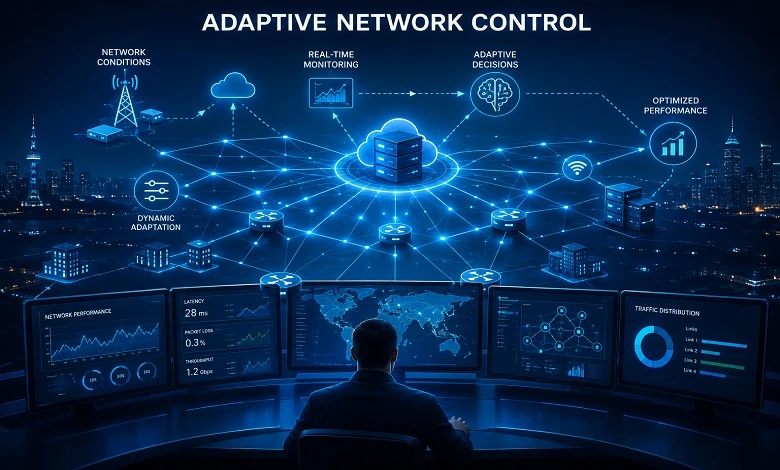
Adaptive Network Control
Introduction
The modern digital world depends on fast, reliable, and secure network connectivity. As businesses adopt cloud computing, artificial intelligence (AI), the Internet of Things (IoT), edge computing, and 5G technologies, traditional networking approaches are struggling to keep pace with increasing complexity. Networks are no longer static infrastructures that require only occasional configuration. Instead, they have become dynamic ecosystems that must respond instantly to changing traffic patterns, security threats, and application demands.
This is where Adaptive Network Control plays a transformative role. Rather than relying on fixed configurations and manual administration, adaptive network control enables networks to monitor conditions continuously, analyze performance in real time, and automatically adjust routing, bandwidth allocation, security policies, and resource management. The result is a smarter, more efficient, and highly resilient network capable of supporting modern digital services.
Organizations across industries—including healthcare, finance, manufacturing, education, retail, and telecommunications—are increasingly adopting adaptive networking technologies to improve operational efficiency and deliver better user experiences. From reducing network downtime to optimizing cloud workloads and strengthening cybersecurity, adaptive network control has become a key component of next-generation IT infrastructure.
This comprehensive guide explores the technologies behind adaptive network control, explains how they work together, highlights their benefits, and examines why they are shaping the future of enterprise and service-provider networks.
What Is Adaptive Network Control?
Adaptive Network Control is an intelligent networking approach that continuously observes network conditions and automatically modifies its behavior to maintain optimal performance, reliability, and security. Instead of depending on fixed configurations, adaptive systems make decisions based on real-time data collected from routers, switches, wireless access points, cloud platforms, applications, and connected devices.
Traditional networks often require administrators to manually troubleshoot congestion, configure routing rules, or update security policies. These manual processes can consume valuable time and may not respond quickly enough during unexpected traffic spikes or cyberattacks.
Adaptive network control eliminates many of these challenges by using automation, analytics, and artificial intelligence to recognize changing conditions and respond immediately. For example, if network traffic suddenly increases because of a major video conference or cloud backup, the system can automatically reroute traffic, prioritize business-critical applications, or allocate additional resources without requiring human intervention.
The concept is especially valuable in environments where thousands of devices communicate simultaneously, such as smart factories, healthcare systems, financial institutions, and large enterprise campuses.
Why Adaptive Network Control Matters
Modern organizations depend heavily on uninterrupted connectivity. Employees collaborate through cloud platforms, customers access online services around the clock, and IoT devices constantly exchange data with centralized systems.
As digital transformation accelerates, networks face several significant challenges:
- Rapid growth in connected devices
- Increasing cloud adoption
- Higher bandwidth requirements
- Sophisticated cybersecurity threats
- Remote and hybrid work environments
- Real-time application demands
- Continuous software updates
Managing these challenges manually is becoming increasingly impractical. Adaptive network control introduces intelligent automation that enables networks to evolve alongside business requirements.
Instead of reacting after problems occur, adaptive systems proactively identify potential issues before they affect users. They continuously analyze traffic patterns, monitor application performance, detect anomalies, and optimize resources automatically.
This proactive approach improves reliability while reducing operational costs and administrative workload.
Key Objectives of Adaptive Network Control
Although implementation varies across organizations, most adaptive networking solutions pursue several common objectives.
Intelligent Traffic Management
Modern networks support a wide variety of applications, from video conferencing and VoIP calls to cloud storage, artificial intelligence workloads, and online collaboration tools. Each application has unique performance requirements.
Adaptive network control continuously monitors traffic flows and dynamically prioritizes critical applications. If network congestion occurs, essential business services receive higher priority while less important traffic is temporarily limited.
This intelligent allocation ensures consistent performance even during peak usage periods.
Automated Decision-Making
Automation is one of the defining characteristics of adaptive networking.
Instead of waiting for network administrators to manually investigate problems, adaptive systems automatically detect performance degradation and initiate corrective actions. These may include rerouting traffic, adjusting bandwidth allocations, restarting services, or updating routing policies.
Automation minimizes downtime while allowing IT teams to focus on strategic initiatives rather than repetitive maintenance tasks.
Continuous Performance Optimization
Network performance constantly changes throughout the day as user behavior evolves.
Adaptive control systems analyze metrics such as:
- Latency
- Throughput
- Packet loss
- Network utilization
- Application response time
- Device availability
- Bandwidth consumption
Using these measurements, the system continuously fine-tunes configurations to maintain optimal performance across the entire network infrastructure.
Enhanced Network Security
Cybersecurity threats evolve just as rapidly as networking technologies.
Adaptive network control strengthens security by continuously monitoring traffic for unusual behavior. If suspicious activity is detected, automated security responses may include isolating compromised devices, blocking malicious traffic, updating firewall policies, or alerting security teams immediately.
This rapid response significantly reduces the risk of widespread attacks.
Core Technologies Behind Adaptive Network Control
Adaptive networking combines several advanced technologies that work together to create intelligent, self-optimizing infrastructures.
Rather than relying on a single innovation, adaptive network control integrates automation, analytics, cloud computing, artificial intelligence, and programmable networking into one coordinated ecosystem.
The following technologies form the foundation of modern adaptive networking.
Artificial Intelligence and Machine Learning
Artificial intelligence has become one of the most influential technologies in modern networking.
AI systems analyze enormous volumes of network telemetry, identify usage patterns, recognize anomalies, and predict future conditions more accurately than traditional monitoring tools.
Machine learning algorithms continuously improve over time as they process additional network data.
Some common AI-powered capabilities include:
- Predictive maintenance
- Intelligent routing optimization
- Automated fault detection
- Capacity forecasting
- Security threat identification
- Performance optimization
Instead of responding only after failures occur, AI enables proactive network management that prevents many issues before they affect users.
Software-Defined Networking (SDN)
Software-Defined Networking, commonly known as SDN, separates the network’s control functions from its underlying hardware infrastructure.
Traditional networking devices make independent forwarding decisions, which can complicate large-scale management.
SDN introduces centralized controllers that provide administrators with complete visibility across the network.
This centralized architecture allows adaptive control systems to:
- Update routing policies instantly
- Optimize traffic paths
- Deploy new services faster
- Improve resource utilization
- Simplify network management
Because policies can be modified through software rather than manual hardware configuration, organizations gain greater flexibility and scalability.
Network Automation
Automation removes repetitive manual tasks that traditionally consumed significant administrative time.
Adaptive networking platforms automate activities such as:
- Device provisioning
- Configuration management
- Firmware updates
- Policy deployment
- Network monitoring
- Fault recovery
- Compliance verification
Automation not only improves efficiency but also reduces human error, one of the leading causes of network outages.
Organizations with thousands of network devices particularly benefit from automated operations because consistent configurations become much easier to maintain.
Real-Time Analytics
Adaptive decisions depend on accurate information.
Real-time analytics platforms collect data from every component within the network, including routers, switches, wireless controllers, cloud services, servers, endpoints, and IoT devices.
This continuous flow of operational data enables adaptive systems to detect congestion, identify failures, analyze application performance, and measure user experience almost instantly.
Instead of relying on historical reports, administrators receive live insights that support immediate corrective actions.
Benefits for Modern Organizations
Adaptive network control delivers measurable advantages beyond technical improvements. Businesses adopting intelligent networking often experience increased productivity because employees spend less time dealing with connectivity issues and more time focusing on meaningful work.
Operational costs also decrease as automation reduces manual configuration tasks and minimizes expensive downtime. Since adaptive systems optimize bandwidth usage and infrastructure resources, organizations can often delay costly hardware upgrades while still supporting growing workloads.
Perhaps most importantly, adaptive networking creates a foundation that can evolve alongside emerging technologies. As organizations continue adopting AI applications, edge computing, IoT devices, and cloud-native services, adaptive control ensures that network infrastructure remains flexible, resilient, and ready for future demands.
Intent-Based Networking: Making Networks Smarter
One of the most important innovations supporting adaptive network control is Intent-Based Networking (IBN). Traditional network management requires administrators to configure devices manually, define routing policies, and continually monitor performance. As enterprise networks expand across cloud environments, branch offices, and remote workforces, this manual approach becomes increasingly difficult.
Intent-Based Networking changes the process by allowing administrators to define the desired business outcome rather than configuring every device individually. For example, instead of manually setting dozens of security and traffic rules, an administrator can simply specify that video conferencing applications should always receive high priority while guest Wi-Fi traffic should remain isolated from corporate systems.
The networking platform translates these business intentions into automated configurations, continuously verifies that policies are being followed, and automatically makes adjustments if network conditions change.
When integrated with adaptive network control, Intent-Based Networking creates infrastructures that become increasingly autonomous. Rather than waiting for administrators to intervene, the network continuously aligns itself with organizational objectives while maintaining optimal performance and security.
Edge Computing and Adaptive Network Control
The rapid growth of Internet of Things (IoT) devices has significantly changed how data is processed. Instead of sending every piece of information to centralized cloud servers, many organizations now process data closer to where it is generated through edge computing.
Adaptive network control plays a vital role in managing this distributed architecture. Edge devices often experience changing workloads, varying network conditions, and fluctuating bandwidth availability. Intelligent networking platforms continuously monitor these conditions and determine the most efficient location for processing data.
For example, a smart manufacturing facility may contain thousands of connected sensors that generate massive amounts of operational data every second. Rather than sending all of this information to a distant cloud data center, adaptive network control can prioritize time-sensitive processing at nearby edge servers while transferring less urgent data to the cloud for long-term analysis.
This intelligent decision-making reduces latency, improves application responsiveness, lowers bandwidth consumption, and enhances the overall user experience.
Cloud-Native Networking
Cloud computing has become the foundation of modern digital infrastructure. Many organizations now operate workloads across public clouds, private clouds, and hybrid environments.
Adaptive network control helps organizations manage these increasingly complex infrastructures by dynamically adjusting network policies based on application requirements and resource availability.
Cloud-native networking introduces several important capabilities:
Dynamic Resource Allocation
Cloud workloads constantly change as demand increases or decreases throughout the day. Adaptive systems automatically allocate bandwidth, routing capacity, and network resources based on current application requirements.
This flexibility improves efficiency while ensuring critical applications always receive sufficient resources.
Intelligent Traffic Distribution
Modern applications often operate across multiple cloud regions. Adaptive networking continuously evaluates latency, congestion, and resource availability before selecting the most efficient communication path.
As a result, users experience faster application performance regardless of their geographic location.
Automated Scalability
Cloud environments allow businesses to scale applications rapidly. Adaptive network control ensures networking infrastructure scales alongside computing resources without requiring extensive manual configuration.
Organizations can therefore support rapid business growth while maintaining reliable network performance.
Network Orchestration
Automation becomes even more powerful when combined with orchestration.
While automation performs individual tasks automatically, orchestration coordinates multiple automated processes into complete workflows.
For example, launching a new enterprise application may require:
- Creating virtual networks
- Configuring firewalls
- Updating routing policies
- Allocating cloud resources
- Deploying security certificates
- Monitoring application performance
Instead of completing these tasks individually, network orchestration performs them as one coordinated process.
Adaptive network control integrates orchestration platforms with monitoring systems, allowing networks to respond automatically whenever infrastructure changes occur.
This capability significantly reduces deployment times while minimizing configuration errors.
Network Function Virtualization (NFV)
Another major technology supporting adaptive networking is Network Function Virtualization (NFV).
Traditional networking relied on dedicated hardware appliances for services such as firewalls, load balancers, intrusion detection systems, and WAN optimization.
NFV replaces these specialized devices with software-based virtual services running on standard servers.
Adaptive network control manages these virtual network functions dynamically by allocating resources where they are needed most.
Some advantages include:
- Lower infrastructure costs
- Faster deployment
- Improved scalability
- Simplified maintenance
- Better resource utilization
Because services exist as software rather than physical appliances, organizations can rapidly introduce new capabilities without purchasing additional hardware.
Zero Trust Security
Security has become a central component of adaptive networking.
Traditional security models often assumed users and devices inside the corporate network could be trusted. Modern cybersecurity strategies have largely replaced this assumption with the Zero Trust model.
Zero Trust follows one simple principle:
Never trust—always verify.
Adaptive network control supports Zero Trust by continuously evaluating users, devices, applications, and network behavior.
Instead of granting permanent access after login, adaptive systems continuously verify:
- User identity
- Device health
- Application behavior
- Geographic location
- Network activity
- Risk level
If suspicious behavior is detected, adaptive policies immediately respond by limiting permissions, requiring additional authentication, or isolating compromised devices.
This continuous verification significantly strengthens enterprise security.
Artificial Intelligence for Predictive Networking
Artificial intelligence has evolved beyond simple monitoring tools.
Modern adaptive network platforms use predictive analytics to anticipate future conditions before problems occur.
Machine learning models analyze historical and real-time data to predict:
- Bandwidth demand
- Hardware failures
- Network congestion
- Security threats
- Application slowdowns
- Capacity limitations
Rather than reacting after users experience poor performance, adaptive systems proactively adjust configurations to avoid service disruptions.
Predictive networking helps organizations improve reliability while reducing operational costs.
Digital Twin Technology
Digital Twin technology is becoming increasingly valuable in enterprise networking.
A digital twin is a virtual representation of the physical network infrastructure. It mirrors routers, switches, wireless devices, cloud services, security appliances, and applications.
Adaptive network control uses digital twins to simulate changes before deploying them in production.
Network administrators can safely test:
- New routing policies
- Security updates
- Software upgrades
- Infrastructure expansion
- Traffic engineering strategies
This reduces implementation risks and improves planning accuracy.
As networks become more complex, digital twins provide valuable insights that support intelligent decision-making.
Adaptive Network Control in Enterprise Environments
Organizations across multiple industries are implementing adaptive networking solutions to improve performance and operational efficiency.
Financial Services
Banks require secure, low-latency connectivity for online transactions, fraud detection, digital payments, and customer services.
Adaptive network control automatically prioritizes financial applications while strengthening cybersecurity against evolving threats.
Healthcare
Hospitals depend on reliable connectivity for electronic health records, telemedicine platforms, connected medical devices, and diagnostic systems.
Adaptive networking ensures critical healthcare applications receive uninterrupted bandwidth while maintaining strict security standards.
Manufacturing
Smart factories generate enormous volumes of sensor data through Industrial IoT devices.
Adaptive network control dynamically manages communication between production equipment, robotics, quality-control systems, and cloud analytics platforms.
The result is higher efficiency, reduced downtime, and improved operational visibility.
Education
Universities and schools increasingly depend on cloud-based learning platforms, virtual classrooms, research applications, and campus-wide wireless connectivity.
Adaptive networking balances network demand during peak usage while maintaining excellent user experiences for students and educators.
Retail
Retail organizations operate online stores, payment systems, inventory management platforms, customer analytics tools, and smart point-of-sale devices.
Adaptive control optimizes application performance while protecting sensitive customer information from cyber threats.
Benefits of Adaptive Network Control
Organizations implementing adaptive networking often experience measurable improvements across both technical and business operations.
Some of the most significant advantages include:
- Faster network performance
- Reduced downtime
- Improved application responsiveness
- Lower operational costs
- Stronger cybersecurity
- Better cloud integration
- Simplified network management
- Automated troubleshooting
- Enhanced scalability
- Improved user experience
- Efficient bandwidth utilization
- Support for AI and IoT workloads
As digital transformation accelerates, these advantages become increasingly valuable for organizations seeking competitive advantages in rapidly changing markets.
Challenges of Implementing Adaptive Network Control
Although adaptive network control offers significant advantages, organizations should also understand the challenges involved in implementing intelligent networking solutions. Successful deployment requires careful planning, investment, and ongoing management.
High Initial Investment
Modern adaptive networking often requires upgrades to existing infrastructure, software platforms, cloud services, and security systems. Organizations may also need to invest in automation tools, AI-powered monitoring platforms, and employee training.
While the initial cost can be substantial, many businesses recover their investment over time through reduced downtime, improved efficiency, and lower operational expenses.
Integration with Legacy Systems
Many enterprises still rely on older networking equipment that was never designed for automation or AI-driven management. Integrating adaptive network control with these legacy systems can be complex and may require phased upgrades.
A gradual migration strategy helps organizations modernize their infrastructure without disrupting daily business operations.
Skills and Training
Adaptive networking combines multiple technologies, including artificial intelligence, cloud computing, software-defined networking (SDN), cybersecurity, and automation. IT teams must develop new skills to manage these advanced environments effectively.
Regular training and certification programs can help network administrators stay current with evolving technologies.
Data Privacy and Compliance
Adaptive network control collects and analyzes large amounts of operational data. Organizations must ensure this data is handled securely while complying with industry regulations such as GDPR, HIPAA, or other regional privacy standards.
Strong governance policies and encryption techniques help maintain compliance while protecting sensitive information.
Best Practices for Successful Implementation
Organizations planning to adopt adaptive network control can maximize success by following proven best practices.
Define Clear Business Objectives
Before implementing any networking solution, organizations should identify their goals. These objectives may include improving application performance, reducing downtime, strengthening cybersecurity, or supporting cloud migration.
Clear objectives help guide technology selection and deployment strategies.
Build a Scalable Architecture
Network demands continue to grow as businesses adopt cloud computing, IoT devices, AI applications, and remote work environments. A scalable architecture ensures the network can expand without requiring major redesigns.
Scalability also protects long-term technology investments.
Prioritize Security
Security should be integrated into every layer of the network rather than added later.
Organizations should implement:
- Multi-factor authentication
- Zero Trust architecture
- Network segmentation
- Continuous monitoring
- Automated threat detection
- Regular vulnerability assessments
Combining adaptive network control with modern cybersecurity practices creates a stronger defense against evolving threats.
Monitor Performance Continuously
Adaptive networking is most effective when supported by continuous monitoring.
Organizations should regularly evaluate:
- Network latency
- Bandwidth utilization
- Device health
- Application response times
- Packet loss
- Security alerts
- Infrastructure availability
These insights enable the system to make intelligent adjustments while providing administrators with valuable operational visibility.
Automate Gradually
Rather than automating every process at once, organizations should begin with routine tasks such as device provisioning, configuration management, and software updates.
Once confidence grows, more advanced workflows—including predictive maintenance and AI-driven optimization—can be introduced.
The Future of Adaptive Network Control
Adaptive network control will continue evolving alongside advances in networking, artificial intelligence, and cloud technologies. The coming years are expected to bring even greater automation and intelligence to enterprise infrastructures.
Autonomous Networks
Future networks will increasingly manage themselves with minimal human intervention. AI-powered systems will monitor performance, predict failures, optimize routing, and respond to cyber threats automatically.
These self-managing networks will reduce operational complexity while improving reliability.
Artificial Intelligence Everywhere
Artificial intelligence will become deeply integrated into every aspect of networking.
Future AI capabilities may include:
- Autonomous troubleshooting
- Predictive capacity planning
- Intelligent traffic engineering
- Automated compliance monitoring
- Dynamic security policy generation
- Real-time application optimization
Machine learning models will continue improving as they analyze larger volumes of operational data.
Expansion of Edge Computing
As billions of IoT devices connect to global networks, edge computing will become increasingly important.
Adaptive network control will intelligently determine where applications should process data—whether at the edge, in regional data centers, or in the public cloud—to minimize latency and maximize efficiency.
5G and the Evolution Toward 6G
The rollout of 5G has already transformed mobile connectivity by providing faster speeds, lower latency, and greater device capacity. Looking ahead, research into 6G networks promises even more advanced capabilities, including ultra-low latency, AI-native networking, and seamless communication between terrestrial and satellite systems.
Adaptive network control will play a central role in managing these highly dynamic environments by automatically allocating resources, balancing traffic, and maintaining service quality across diverse network infrastructures.
Sustainable Networking
Energy efficiency is becoming a priority for organizations seeking to reduce operational costs and environmental impact.
Adaptive networking platforms can optimize power consumption by dynamically adjusting network resources based on current demand. Idle devices may enter low-power modes, while workloads can be distributed to maximize efficiency.
This intelligent resource management supports both business sustainability goals and environmental responsibility.
Why Adaptive Network Control Is Essential for Digital Transformation
Digital transformation depends on networks that are intelligent, secure, and flexible. Businesses are adopting cloud services, remote work models, artificial intelligence, big data analytics, and IoT devices at an unprecedented pace.
Without adaptive networking, managing these technologies becomes increasingly difficult.
Adaptive network control provides the foundation for digital transformation by enabling organizations to:
- Respond quickly to changing business needs.
- Improve customer experiences through reliable connectivity.
- Support hybrid and multi-cloud environments.
- Strengthen cybersecurity against emerging threats.
- Automate repetitive administrative tasks.
- Scale infrastructure efficiently as demand grows.
- Deliver consistent performance across distributed networks.
As organizations continue modernizing their operations, adaptive networking will become a strategic business capability rather than simply an IT function.
Conclusion
Adaptive Network Control is transforming the way modern networks operate by replacing static configurations with intelligent, data-driven decision-making. Through technologies such as artificial intelligence, machine learning, software-defined networking, network automation, edge computing, cloud-native infrastructure, intent-based networking, and Zero Trust security, organizations can build networks that continuously optimize themselves in response to changing conditions.
The benefits extend well beyond improved network performance. Adaptive networking enhances cybersecurity, reduces operational costs, minimizes downtime, supports digital transformation, and prepares businesses for emerging technologies such as autonomous systems, 5G, 6G, and advanced IoT ecosystems.
Although implementation requires careful planning and investment, the long-term advantages make adaptive network control a valuable strategy for organizations seeking resilient, scalable, and future-ready network infrastructures. As technology continues to evolve, adaptive network control will remain one of the key technologies powering next-generation networks.
Frequently Asked Questions (FAQs)
A. Adaptive Network Control is an intelligent networking approach that automatically monitors, analyzes, and adjusts network operations in real time to improve performance, security, and reliability.
A. It continuously evaluates traffic patterns, bandwidth usage, latency, and application performance, automatically optimizing routing and resource allocation to maintain efficient operations.
A. Key technologies include artificial intelligence, machine learning, Software-Defined Networking (SDN), network automation, intent-based networking, edge computing, cloud-native networking, Network Function Virtualization (NFV), and Zero Trust security.
A. Yes. While large enterprises often implement advanced adaptive networking solutions, many cloud-based networking platforms now offer scalable options suitable for small and medium-sized businesses.
A. Artificial intelligence analyzes network data, predicts failures, detects anomalies, automates troubleshooting, and continuously optimizes network performance without requiring constant manual intervention.
A. It continuously monitors network activity, detects unusual behavior, automates security responses, enforces Zero Trust policies, and helps reduce the impact of cyberattacks.
A. Yes. Adaptive networking is designed to support public, private, hybrid, and multi-cloud environments by dynamically managing traffic, workloads, and network resources.
A. Healthcare, finance, manufacturing, education, retail, telecommunications, government, logistics, and technology companies all benefit from intelligent and automated network management.
A. Organizations commonly face challenges related to legacy infrastructure integration, initial investment costs, workforce training, and regulatory compliance. However, careful planning and phased deployment can address these issues.
A. The future includes AI-driven autonomous networks, expanded edge computing, intelligent cloud management, 6G connectivity, predictive analytics, and highly automated network operations that require minimal human intervention.

3 thoughts on “Adaptive Network Control: Key Technologies Powering Next-Generation Networks”
Comments are closed.